That steady plink into the sink can be easy to ignore during a busy week. But if you are asking what causes kitchen faucet drips, the answer is usually not mysterious: a small internal part is no longer making a complete seal. The right next step depends on where the water is coming from, the type and age of the faucet, and whether a minor component issue has turned into a reason to replace the fixture.
A kitchen faucet works hard every day. It handles cooking cleanup, handwashing, filling pots, rinsing produce, and more. Over time, moving parts wear down, mineral deposits build up, and seals lose flexibility. A drip may be minor at first, but it can waste water, leave mineral marks in the sink, and become more frustrating than it needs to be.
What causes kitchen faucet drips at the spout?
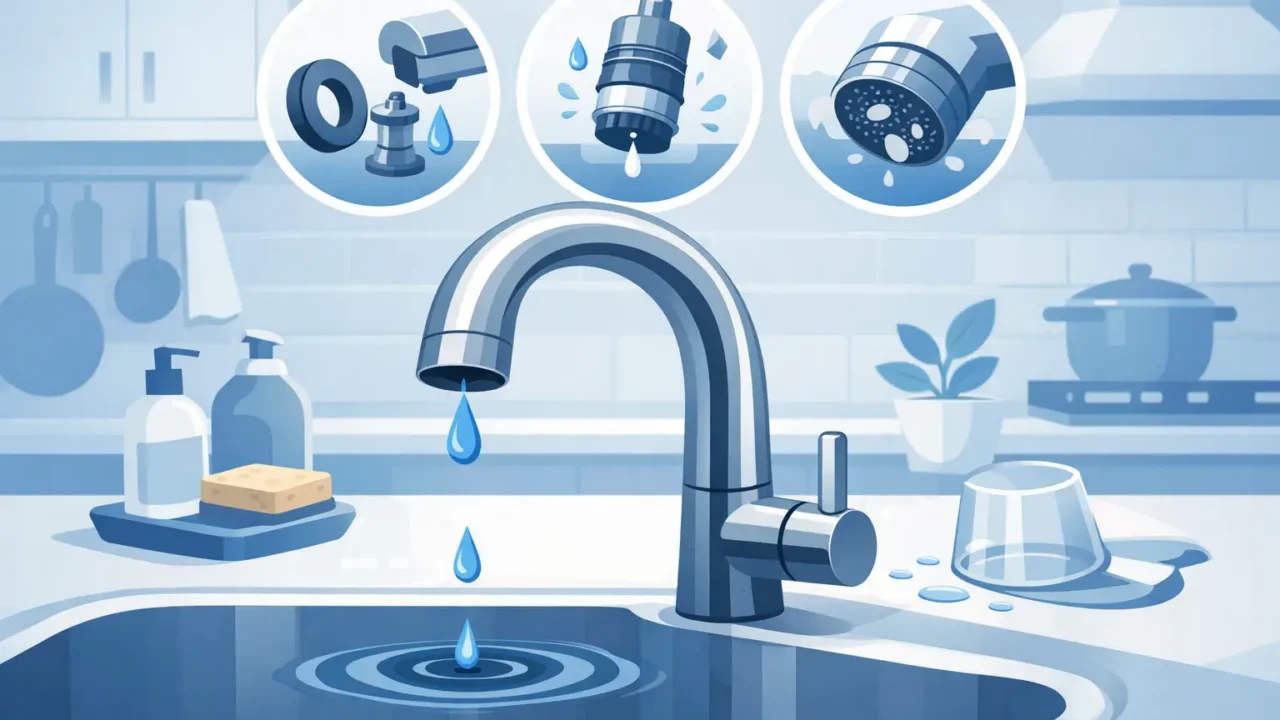
When water falls from the end of the spout after the faucet is turned off, the most likely cause is a worn sealing component inside the handle or faucet body. The exact part varies by faucet design.
Many newer single-handle faucets use a cartridge. Moving the handle changes the cartridge position to control hot and cold water flow. Once the cartridge becomes worn, scratched, or clogged with sediment, it may not close fully. Water then continues through the spout even though the handle is in the off position.
Two-handle faucets often rely on washers, valve seats, stems, or similar components. A hardened washer can no longer press tightly against its seat. A damaged or corroded valve seat can create the same problem. In either case, the faucet may drip because a tiny opening remains in the water path.
The drip rate does not always reveal the severity of the issue. A faucet that drips only once every few seconds still has a failing seal. On the other hand, a sudden, fast drip can indicate that a cartridge or internal assembly has reached the end of its useful life.
Mineral buildup can keep parts from sealing
North Texas water can leave mineral deposits on fixtures and inside faucet components. Over time, buildup can interfere with the smooth movement of a cartridge or prevent internal pieces from seating properly. You may notice reduced water flow, a stiff handle, uneven spray, or white residue around the spout along with the drip.
Cleaning an aerator can improve spray performance, but it will not necessarily stop a faucet that leaks when shut off. The aerator is the small screen at the tip of the spout. A drip caused by an internal seal usually needs attention farther inside the faucet.
Water pressure can make a weak seal more noticeable
High household water pressure does not usually create a faucet drip by itself. However, it can make a worn washer, cartridge, or valve seat leak more visibly. If several fixtures in the home have started dripping, banging, or behaving unpredictably, the bigger issue may deserve professional plumbing evaluation rather than a faucet-only solution.
Not every kitchen faucet leak drips from the spout
It helps to identify the exact location before deciding what to do. Water at the spout when the faucet is off points to an internal shutoff issue. Water around the handle, at the base of the faucet, or below the sink can have different causes.
A leak around the handle often comes from worn O-rings, packing material, or a loose retaining component. O-rings are small rubber seals that help keep water inside the faucet body while the handle moves. They eventually wear out, especially on older fixtures.
Water pooling around the base of the faucet can come from a deteriorated base gasket or seal. It may also be water running down from the handle or spout during normal use, so dry the area completely and watch closely while operating the faucet. If water appears only when the faucet is running, it may be escaping from a joint, hose, spray-head connection, or damaged seal.
A cabinet leak beneath the sink is different from a spout drip and should not be brushed aside. Check the supply-line connections, shutoff valves, and hoses with a dry paper towel while the faucet is on and off. Even a slow under-sink leak can damage the cabinet floor, encourage mold growth, and create a larger repair later.
Why a faucet can drip after a recent installation
A newer faucet is less likely to have ordinary age-related wear, but it is not immune to problems. A cartridge may be defective, debris may have entered during installation, or a connection may not be fully tightened. Some faucets also have manufacturer-specific parts that need to be identified carefully before any repair attempt.
If the faucet was installed recently and the drip started right away, avoid forcing the handle or overtightening visible screws. Excess pressure can damage a handle, strip a fastener, or make a small issue harder to diagnose. Keep the installation paperwork and model information available, particularly if the fixture may still be covered by a manufacturer warranty.
A few checks homeowners can make safely
Start by confirming that the faucet is fully off without forcing the handle. Then dry the faucet, sink deck, and cabinet area so you can see where fresh water appears. Observe whether the leak occurs only after use, continuously while the faucet is off, or only while water is running.
Look for obvious clues such as a loose spray-head hose, moisture around a handle, mineral buildup, or a wet supply-line connection below the sink. If the faucet has a pull-down sprayer, make sure the hose is not snagged on stored items under the cabinet. A restricted hose can affect how the spray head retracts, though it is not a common cause of a drip from the spout.
Before removing a handle or any internal component, turn off the hot and cold shutoff valves below the sink. If either valve will not turn easily, do not force it. Older shutoff valves can fail when disturbed, which changes a simple faucet project into a broader plumbing issue.
Repair the faucet or replace it?
For a relatively new, quality faucet with an available replacement cartridge or seal kit, repairing the internal component can make practical sense. This is especially true when the finish is in good condition, the handle works smoothly, and the faucet otherwise meets your household’s needs.
Replacement may be the better value when a faucet has repeated leaks, corrosion, a loose base, a damaged finish, hard-to-find parts, or an outdated design that no longer works well for the kitchen. It can also be a good opportunity to choose a configuration that better fits how you use the sink, such as a pull-down sprayer, taller spout, or single-handle design.
There are trade-offs. A replacement faucet costs more than a single internal part, and the new fixture must fit the existing sink-hole configuration and countertop setup. Still, putting money into repeated fixes for an aging faucet can become less sensible than installing a dependable replacement.
For homeowners who have already selected a new fixture, Direct Home Pros can help with a planned kitchen faucet replacement. Clear expectations matter: confirm the faucet specifications, existing sink configuration, and any visible under-sink concerns before scheduling so the project can be completed cleanly and tested properly.
When a drip needs prompt attention
A slow drip from the spout is usually a maintenance issue, not an emergency. But water below the sink, swelling cabinet materials, a leaking shutoff valve, or an inability to stop water flow deserves faster attention. Place a container under an active cabinet leak if needed, clear belongings away from the area, and avoid using damaged electrical equipment nearby.
If you notice water coming from the wall, major water pressure changes, or widespread plumbing problems, contact an appropriately qualified plumbing professional. Those signs go beyond a routine fixture replacement and may involve the home’s plumbing system.
A kitchen faucet should turn on easily, shut off completely, and leave the area beneath the sink dry. Paying attention to a small drip now gives you time to choose the right solution, rather than dealing with a worn-out fixture on the day it finally stops cooperating.