A kitchen sprayer that drips into the cabinet, delivers a weak stream, or will not switch on can turn a simple cleanup task into a daily frustration. Before you replace kitchen faucet sprayer parts, identify the type of faucet and the actual source of the problem. The right replacement is often straightforward, but a mismatched hose or overlooked leak can create more work under the sink.
Start by Identifying Your Faucet Sprayer Type
Not every kitchen faucet sprayer works the same way. The most familiar setup is a separate side sprayer mounted beside the faucet, with a hose running below the sink. When you squeeze the trigger, a diverter inside the faucet redirects water from the main spout to the sprayer.
Pull-down and pull-out faucets are different. Their spray heads are part of the faucet itself, and the hose usually connects to a proprietary fitting or quick-connect system below the sink. These parts may look similar from one brand to another, but they are not always interchangeable.
Before buying anything, look for the manufacturer name and model number. It may be printed on the faucet body, the original paperwork, or a small tag attached to the supply line or hose. A clear photo of the faucet, spray head, hose connection, and mounting area can also help you compare parts accurately.
A universal replacement sprayer may work for some side-sprayer faucets with standard threaded connections. It is much less reliable for pull-down models. Choosing a manufacturer-specific part can cost more up front, but it often avoids leaks, poor fit, and a return trip to the store.
Confirm What Actually Needs Replacement
The sprayer head is not always the failed part. Mineral buildup can restrict flow at the spray head, while a worn diverter can prevent water from reaching the sprayer even when the hose and trigger are in good shape. A leak beneath the sink may come from the hose, connection, or faucet body instead.
Start with a quick visual check. If the head leaks only when you squeeze the trigger, the trigger assembly or spray head may be worn. If water appears under the sink whenever the sprayer is used, inspect the full length of the hose and the connection where it attaches to the faucet. If the sprayer has weak pressure but the faucet stream is strong, debris in the spray head or a restricted hose is more likely.
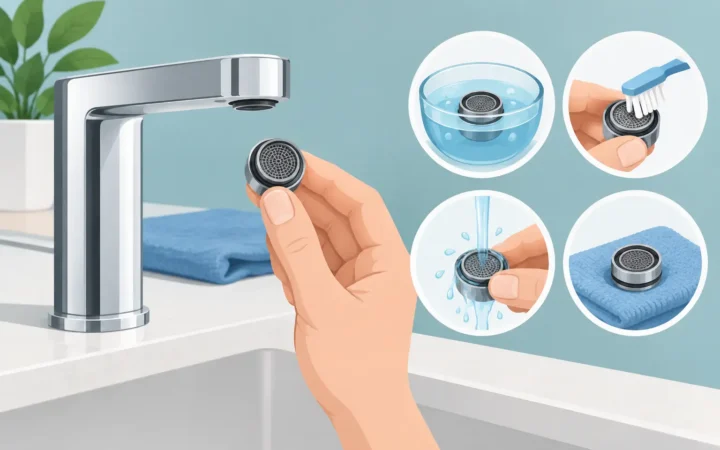
In North Texas, mineral deposits can build up in faucet components over time. If the spray pattern is uneven, remove the head only if the model allows it and check its screen for debris. Cleaning may solve a minor flow problem. Cracked plastic, a split hose, or a corroded connection generally calls for replacement.
What You Will Need Before Replacing a Sprayer
For a standard side sprayer, gather the replacement part first and make sure it includes any required washer or gasket. Keep a towel and shallow pan under the sink because even closed shutoff valves can leave some water in the lines. The job commonly calls for:
- An adjustable wrench or channel-lock pliers
- A basin wrench if the connection is difficult to reach
- A towel and shallow pan for residual water
- Plumber’s tape only if the replacement instructions call for it
Avoid forcing a connection that does not thread on smoothly by hand. Cross-threading can damage the fitting and turn a sprayer replacement into a larger faucet repair. Also, do not assume that a tighter connection is always better. Overtightening can damage plastic fittings, crush a gasket, or cause a slow leak later.
How to Replace a Kitchen Faucet Sprayer on a Side-Sprayer Faucet
Turn off the hot and cold water shutoff valves under the sink before disconnecting anything. Then turn on the faucet briefly to release pressure and confirm that the water is off. If the shutoff valves do not turn easily or do not fully stop the water, do not force them. A stuck valve can create a separate plumbing issue.
Place your towel and pan beneath the faucet connections. Pull the old sprayer hose out from above the sink as far as it will go, then locate where the hose connects below. Depending on the faucet, the hose may attach with a threaded nut, a clip, or a quick-connect fitting. Take a photo before removing it so you have a reference for the new installation.
Disconnect the old hose carefully. If the sprayer includes a guide or mounting sleeve in the sink deck, remove the old head and hose from above. Install the new guide or sprayer assembly according to the manufacturer instructions, then feed the hose down through the opening. Attach it below the sink by hand first, and use a tool only for the final light tightening if necessary.
Once the connection is secure, turn the water back on slowly. Check beneath the sink before using the sprayer. Run the main faucet, then test the sprayer several times while watching the hose and connection points. Confirm that the spray head returns properly to its holder and that the hose does not rub against the garbage disposal, drain pipes, or stored items under the sink.
Pull-Down Sprayers Require a Closer Look
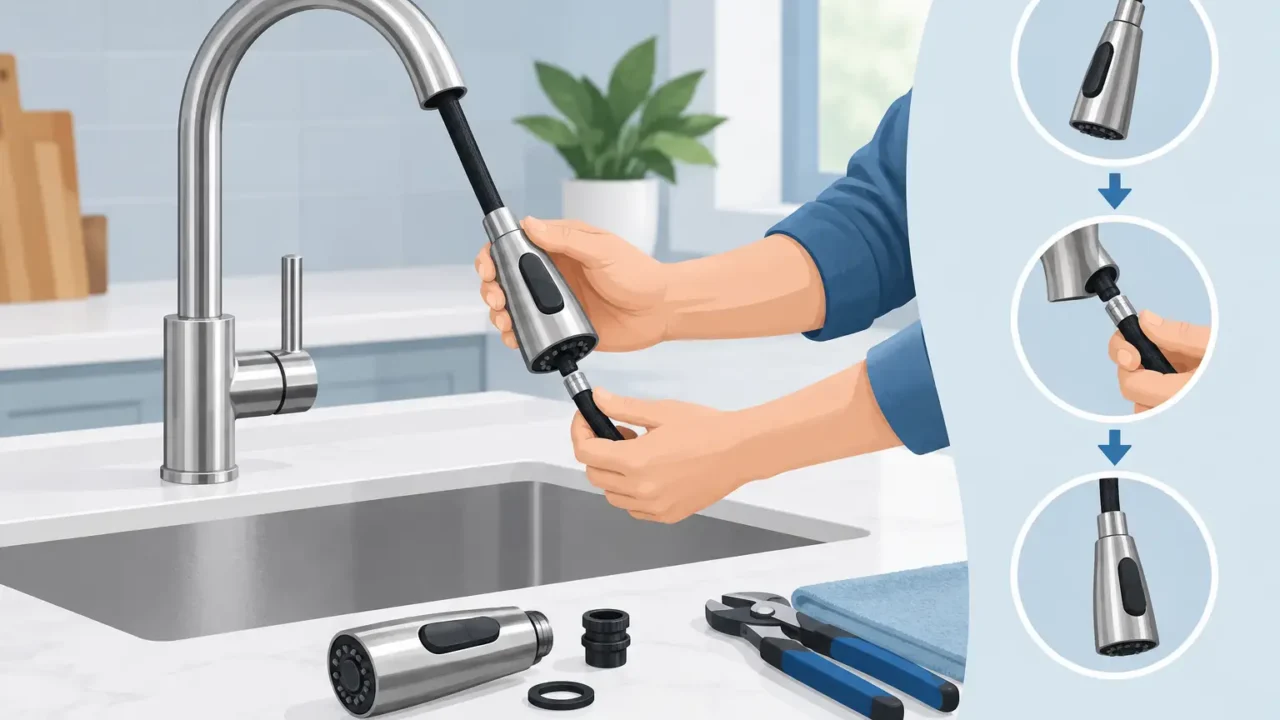
Replacing a pull-down spray head can be simple when the faucet manufacturer offers a matching part. Even then, confirm whether the issue is the head, hose, weight, or connection. A loose counterweight can prevent the hose from retracting, while a damaged quick-connect can leak beneath the faucet.
Generic pull-down spray heads are a gamble unless the manufacturer specifically confirms compatibility. Thread size, hose diameter, valve design, and spray settings vary by brand. A head that screws on may still leak or fail to switch between stream and spray modes correctly.
If the faucet is older and parts are discontinued, replacing the full faucet may be the more practical choice. This is especially true when there are multiple issues, such as a leaking spray hose, a loose handle, mineral buildup, and worn finish. Repairing one component can make sense, but not when the rest of the faucet is nearing the end of its useful life.
When a Replacement Faucet Makes More Sense
A new faucet is worth considering when the sprayer problem is part of a larger pattern. Repeated drips, a failing diverter, stiff handles, corrosion under the sink, or unavailable replacement parts can make a piecemeal repair less economical.
Homeowners should also consider how the faucet fits their kitchen routine. A pull-down faucet can be convenient for rinsing large cookware, while a traditional side sprayer may be easier and less expensive to repair. The best choice depends on the number of sink holes available, the clearance behind the faucet, the style you prefer, and the replacement parts you can reasonably obtain later.
If you purchase a new faucet, confirm what is included in the box before scheduling installation. Check for supply lines, deck plates, mounting hardware, and any soap dispenser or sprayer components. Having the correct fixture and parts ready helps the appointment stay focused and avoids unnecessary delays.
Avoid the Leaks That Show Up After the Job
A successful sprayer replacement is not just about restoring water flow. The final test matters. Open the cabinet, dry every connection, and run both hot and cold water through the faucet and sprayer. Then check again after several minutes. A tiny bead of water at a fitting is an early warning sign, not something to ignore.
Keep the hose path clear after the repair. Cleaning supplies, trash bags, and other stored items can snag the hose and pull on its connection every time the sprayer is used. Periodically look beneath the sink for moisture, especially if you notice a musty smell or cabinet swelling.
For homeowners in Hurst, Euless, Bedford, Grapevine, Fort Worth, and nearby Dallas-Fort Worth communities, Direct Home Pros can help when a worn sprayer points to a needed faucet replacement. You can choose the faucet that fits your kitchen, expect clear communication about the work, and have the installation tested and the work area cleaned before the job is complete.
A kitchen sprayer should make cleanup easier, not leave you checking the cabinet floor for water. When the right replacement part is available, careful installation and a thorough leak check can restore the faucet’s everyday usefulness. When the faucet itself is showing its age, replacing it once can be the simpler, more dependable path.