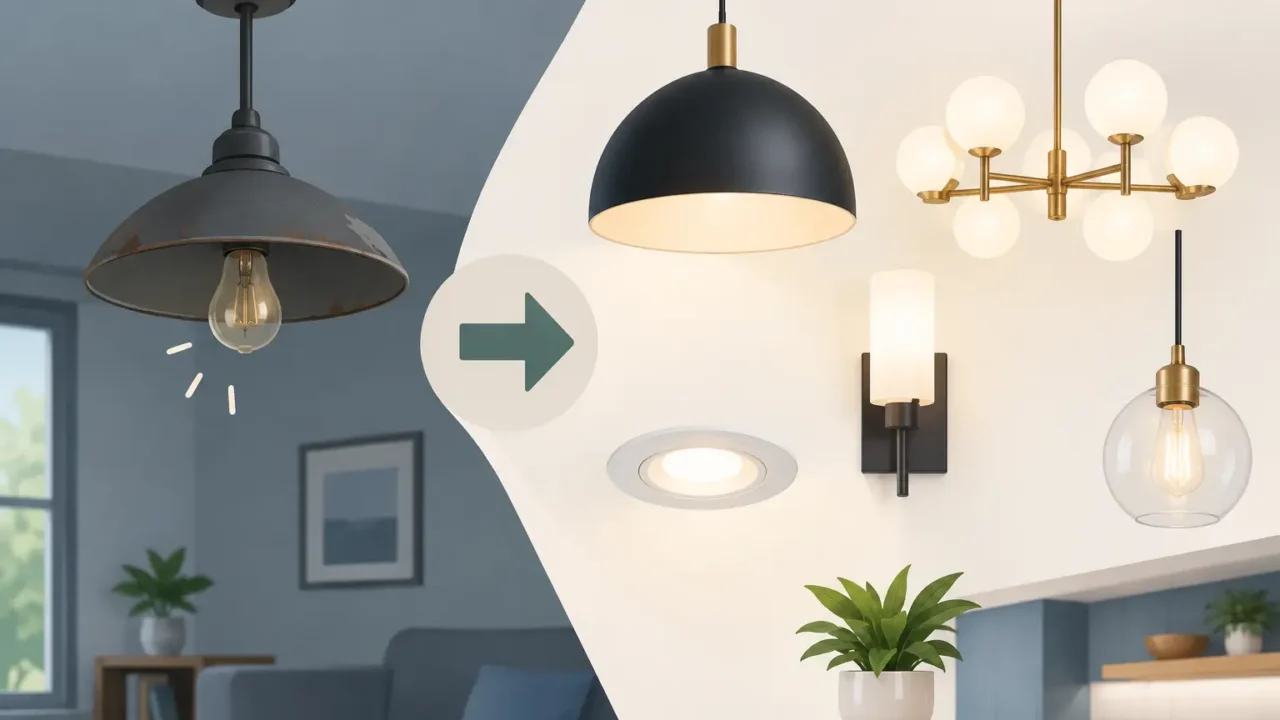
A dated dining-room chandelier, a dim kitchen, or a bathroom vanity light that casts shadows where you need clarity can make an otherwise well-kept room feel unfinished. The right light fixtures do more than update a room’s appearance. They affect how safely you move through the house, how comfortably you work, and how useful each space feels every day.
For Dallas-Fort Worth homeowners, replacing a fixture is often one of the most practical improvements on a home-maintenance list. It can refresh a space without a remodel, but the best result depends on more than choosing a style from a store shelf. Size, brightness, mounting location, existing wiring, and the condition of the electrical box all matter.
Start With the Room, Not the Fixture
A fixture can look great online and still be wrong for the room. Before shopping, think about what the space needs to do. A hallway needs dependable, even illumination. A kitchen needs useful task lighting at counters and sinks. A bedroom often benefits from softer ambient light that does not feel harsh at night.
Ceiling height changes the decision as well. In rooms with standard eight-foot ceilings, flush-mount or semi-flush fixtures usually provide clearance without making the ceiling feel crowded. A pendant or chandelier may work better over a dining table, kitchen island, or entry with more vertical space. In a foyer or stairwell, a hanging fixture can create a focal point, but it must remain high enough to avoid interfering with doors, stairs, and daily traffic.
Scale is equally important. A fixture that is too small can disappear in a large room, while one that is oversized can dominate it. Over a dining table, homeowners often choose a fixture that is roughly one-half to two-thirds the width of the table. That is a useful starting point, not a strict rule. A wide table, high ceiling, or open-concept layout may call for a different approach.
Choose Light Fixtures for the Job They Need to Do
The fixture itself is only part of the lighting plan. The bulbs, shade, diffuser, and placement determine how the light performs once it is installed.
Brightness is measured in lumens, not watts. Watts describe energy use, while lumens describe the amount of light produced. An LED bulb may use relatively few watts while providing the brightness once associated with a much higher-wattage incandescent bulb. Check the fixture label for its maximum wattage or LED rating before selecting bulbs.
Color temperature is another decision homeowners notice immediately. It is measured in Kelvin. Warm white light, generally around 2700K to 3000K, feels comfortable in bedrooms, living rooms, and dining areas. Neutral to cooler light, often around 3500K to 4000K, can work well in kitchens, laundry rooms, garages, and bathrooms where visibility matters. There is no single correct choice, but mixing very warm and very cool bulbs in connected spaces can make a home feel inconsistent.
Dimmable lighting offers flexibility in rooms that serve more than one purpose. A dining room may need bright light for homework or game night and softer light for dinner. A bedroom can benefit from a lower setting before bed. If you want dimming, confirm that the fixture, bulbs, and existing wall control are compatible. A dimmable bulb alone does not guarantee a smooth dimming experience.
Placement matters as much as brightness
One central ceiling fixture may not be enough for a larger room. It may illuminate the middle of the floor while leaving counters, closets, or seating areas darker than expected. Kitchens commonly need a combination of ceiling lighting and targeted lighting over work areas. Bathrooms need lighting that reduces shadows around the mirror, not simply a bright fixture centered behind the person using it.
For exterior locations, choose a fixture rated for the environment where it will be installed. A covered porch and an exposed exterior wall do not face the same moisture conditions. Using the correct rating helps protect the fixture and supports a longer-lasting installation.
When Replacing a Fixture Makes Sense
A fixture does not have to stop working before it is worth replacing. Sometimes the issue is purely visual, such as an outdated finish, yellowed diffuser, or a style that no longer fits the room. Other times, replacement solves a practical problem: inadequate light, an awkward hanging height, a broken switch connection within the fixture, or a fixture that no longer holds bulbs securely.
Pay attention to signs that call for more than a cosmetic update. Frequent flickering, a fixture that feels unusually hot, a burning odor, buzzing, discoloration around the canopy, or a breaker that trips repeatedly should not be ignored. Turn off power to the affected fixture and have the underlying electrical concern evaluated by a qualified electrician. Replacing a decorative fixture will not correct a circuit, wiring, or panel problem.
Older homes may also have ceiling boxes that were installed for lightweight fixtures only. That matters when changing a simple flush mount to a heavier chandelier or ceiling fan. The fixture must be supported by an appropriately rated box and mounting system, not just by drywall or the visible cover plate.
What to Check Before Scheduling Installation
Homeowners can make an installation appointment more efficient by checking a few details before the visit. Confirm that the new fixture is on hand, along with its mounting hardware, shades, bulbs if needed, and any special components included by the manufacturer. Keep the instruction sheet and packaging available until the installation is complete.
Measure the space and compare it with the fixture dimensions, especially for pendants and chandeliers. Consider the hanging length, not only the width. A fixture may fit the room but hang too low once the downrod or chain is added.
It also helps to know whether the existing fixture is controlled by one switch, multiple switches, or a dimmer. Take note of any issues you have noticed, such as intermittent operation or a loose fixture. Clear information before the appointment helps set the right expectations and reduces surprises once work begins.
If the project involves a basic replacement at an existing location, it is often straightforward. If the location has damaged wiring, lacks a suitable mounting box, involves a new electrical location, or presents a more complex electrical concern, the scope may change. A professional should explain that clearly rather than promising work that cannot be completed safely.
A Careful Installation Is About More Than Appearance
It is tempting to judge installation by whether the light turns on. That is only one part of the job. A properly installed fixture should be securely supported, aligned well with the ceiling or wall, connected according to its instructions, and tested before the work area is cleaned up.
Professional installation also helps avoid common frustrations: a crooked canopy, exposed gaps, loose mounting hardware, bulbs that exceed the fixture rating, or a pendant hung at an inconvenient height. These details are small until they become visible every time you enter the room.
For homeowners in Hurst, Euless, Bedford, Grapevine, Southlake, Keller, Arlington, Coppell, Irving, Grand Prairie, Fort Worth, and nearby communities, Direct Home Pros provides light fixture installation and replacement for common residential projects. Homeowners supply the fixture they prefer, while the team focuses on clear expectations, careful installation, testing, and respect for the home. Digital estimates and approvals help make the process straightforward, without pressure to add services you did not request.
Keep New Lighting Working Well
Once installed, a few simple habits can extend the life and appearance of your fixtures. Dust globes, shades, and exposed bulbs periodically, since buildup can noticeably reduce brightness. Use bulbs within the fixture’s stated rating, and avoid overtightening bulbs in delicate sockets.
For glass shades and decorative finishes, use cleaning methods recommended by the manufacturer. Harsh cleaners can damage coatings or leave residue behind. If a fixture begins flickering after a bulb change, try a known compatible bulb before assuming the fixture has failed. If flickering persists, especially along with heat, odor, or breaker issues, stop using the fixture until the cause is assessed.
Good lighting should make a home easier to live in, not create another project to worry about. A well-chosen fixture, installed securely and matched to the room’s needs, can be one of those everyday improvements you appreciate every time you turn on the switch.