A gutter can look fine from the driveway while holding enough leaves, roof grit, and standing water to send the next North Texas downpour toward your foundation. Knowing how to clean clogged gutters gives you a practical way to protect the edges of your roof, siding, landscaping, and walkways before a small blockage turns into a messy drainage problem.
For many homeowners, the biggest decision is not whether the gutters need attention. It is whether the job can be done safely from a ladder. Cleaning a single-story section on a dry, calm day may be reasonable for a confident homeowner with the right equipment. Steep roofs, second stories, unstable ground, overhead power lines, or heavy buildup are different situations. There is no benefit to saving a service call if the ladder setup is not safe.
Know When Your Gutters Are Clogged
You do not always need to climb a ladder to see that a gutter is struggling. Water spilling over the front edge during rain is the clearest signal, but it is not the only one. Look for dark streaks on the fascia, soil washed out around the house, sagging gutter sections, plants growing from the trough, or mulch pushed away near downspouts.
A downspout that releases only a trickle during a steady rain may be blocked. So may a downspout that sends water back out through the gutter seam instead of away from the home. In Dallas-Fort Worth, fast-moving storms can expose a partial clog quickly. Leaves, small branches, oak tassels, roof granules, and windblown debris can collect in a short amount of time.
Cleaning is usually most effective after major leaf drop and again before the rainier parts of the year. The right schedule depends on the trees around your property. A home under mature oaks may need attention more often than a house with an open roofline.
What You Need Before You Start
Gather your equipment before setting up the ladder. Wear work gloves and eye protection. Wet debris can contain sharp twigs, insects, grit, and material that has begun to break down. A small bucket or handled bag makes it easier to collect debris without dropping it into flower beds or onto patios.
You will also want a garden hose with a spray nozzle. A narrow gutter scoop can help, but a small plastic hand scoop works well too. Avoid sharp metal tools that can scratch coated gutters or damage seams. Keep a plumber’s snake available if you suspect the downspout is blocked.
Most importantly, use a sturdy extension ladder or step ladder that is appropriate for the height and placed on firm, level ground. Do not stand on the roof unless you are equipped and trained to do so. Do not lean a ladder against the gutter itself, since the weight can bend or loosen it. A ladder stabilizer can help keep the ladder off the gutter and improve stability near the roof edge.
How to Clean Clogged Gutters Step by Step
Choose a dry day with light wind and good visibility. Tell someone you are working outside, and keep children and pets clear of the work area. If the ground is soft after rain, wait until it firms up or leave the job to a professional.
Start at the downspout opening
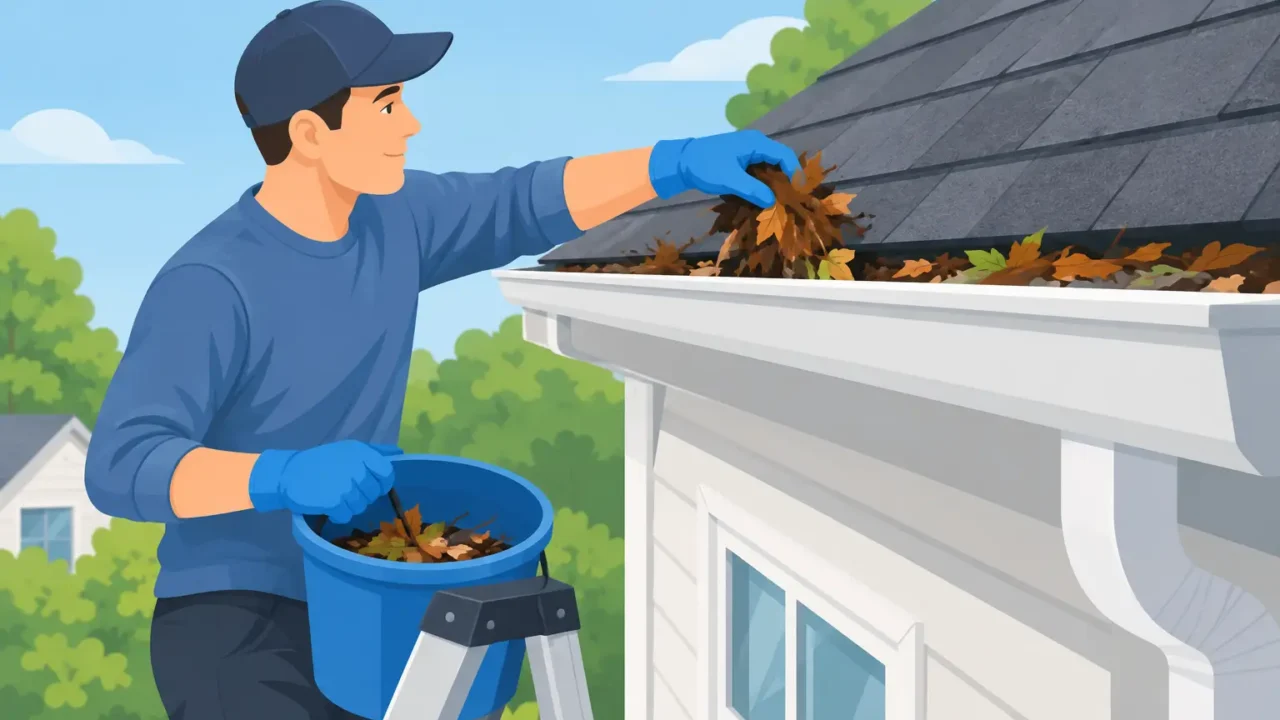
Begin near the downspout opening and remove loose debris by hand or with a plastic scoop. This approach helps prevent you from packing leaves farther into the outlet as you work. Place debris in your bucket rather than tossing it over the edge, where it can scatter across the lawn or create another cleanup job.
Work in short sections. Maintain three points of contact on the ladder, and climb down to move it rather than reaching sideways. Overreaching is one of the most common ladder mistakes. It takes more time to reposition the ladder, but it is the safer choice.
As you clear the trough, look for compacted material at corners and around gutter hangers. These areas often hold wet leaves and roof grit. Remove enough buildup to see the gutter bottom and the opening to the downspout.
Flush the gutter after debris is removed
Once a section is clear, use a garden hose to rinse from the end farthest from the downspout toward the outlet. A steady stream, rather than the strongest possible spray, is usually enough. Watch how the water moves. It should flow consistently toward the downspout without pooling for long periods.
A small amount of standing water can indicate the gutter is not pitched correctly, but it can also be leftover debris. Flush the area a second time after cleaning it. If water continues to sit in the same spot, the gutter may need adjustment or have a sagging section. Cleaning alone will not correct a drainage slope issue.
Do not use a pressure washer for routine gutter cleaning. High pressure can force water behind siding, damage seals, and make an already slippery job harder to manage.
Clear a blocked downspout carefully
If water backs up at the downspout opening, disconnect the lower elbow if it is easy to access and the connection is designed to come apart. Check for a visible clog near the bottom. Many blockages collect at elbows where wet leaves and roof granules settle together.
Flush the downspout from the top with a hose. If water does not pass through, try feeding a plumber’s snake upward from the bottom or downward from the top. Work gently. Forcing a tool through a tightly packed clog can damage a seam or dislodge a section of downspout.
If the downspout remains blocked, or if it is enclosed behind a structure you cannot safely reach, stop there. It may take partial disassembly to clear the obstruction properly. Water should discharge several feet away from the foundation, so also check that the bottom extension is connected and pointed in a useful direction.
Check for Damage While the Gutter Is Empty
Cleaning gives you a close look at the system. Check for loose spikes or hangers, separated seams, rust, cracks, and sections pulling away from the fascia. Look beneath the gutter line for peeling paint, soft-looking wood, or persistent staining. These signs can point to overflow or a longer-term drainage problem.
Pay attention to the roof edge as well. Excess granules in the gutter can be normal in small amounts, especially after a new roof installation, but a heavy and repeated accumulation is worth noting. A gutter cleaning appointment is not a roof inspection, yet it can reveal changes that deserve a closer look from the appropriate professional.
If you find a small leak at a seam, cleaning the area first helps you identify whether the issue is debris-related or a failed seal. Do not assume sealant will solve every leak. A sagging or misaligned gutter section may continue to pull at the seam until the underlying support issue is corrected.
Safety Situations That Call for Professional Help
Some gutter jobs are straightforward, and some have risk built into the property. Consider scheduling help when the gutters are on a second story, the ground slopes sharply, the roofline is high or steep, or debris has created a dense, heavy blockage. The same applies if a ladder would need to be placed near electrical service lines or on uneven landscaping.
You should also avoid handling nests, active insect activity, animal remains, or unknown material in the gutters. These situations require a more careful approach than a basic leaf cleanup. Never perform gutter work during rain, lightning, strong wind, or when roof and ladder surfaces are wet.
For homeowners who would rather skip ladder work, Direct Home Pros provides professional gutter cleaning with clear expectations, careful worksite cleanup, and the straightforward service approach local homeowners expect. It can be especially convenient when gutter cleaning is one item on a longer home-maintenance list.
Keep Clogs From Returning So Quickly
Gutter guards can reduce the amount of larger debris that enters a gutter, but they are not maintenance-free. Fine roof grit, seeds, and small organic material can still collect on top of or beneath some guard styles. They can be helpful around certain tree types, but the best choice depends on the roof, gutter design, and surrounding vegetation.
A simpler prevention plan is to keep nearby tree limbs trimmed back where appropriate, inspect gutters after severe storms, and make cleaning part of your regular seasonal home care. Check downspout discharge after every cleaning. The water needs a clear path away from the foundation, not just a clean trip through the gutter.
A clean gutter is easy to overlook because it is doing exactly what it should: quietly moving water away from your home. A few careful checks each year can keep that quiet job from becoming an expensive surprise after the next heavy rain.