A new ceiling fan should make a room more comfortable, not create another frustrating home project. Ceiling fan installation cost can vary because every room, fan, and existing mounting setup is different. A straightforward replacement in a standard-height room is usually simpler than installing a large fan on a vaulted ceiling or correcting an unsafe mounting situation.
For homeowners, the best way to avoid surprises is to understand what affects the price before the appointment. A clear estimate should account for the fan you provide, the condition of the existing location, and the work needed to securely mount, connect, test, and clean up after the installation.
What is included in ceiling fan installation cost?
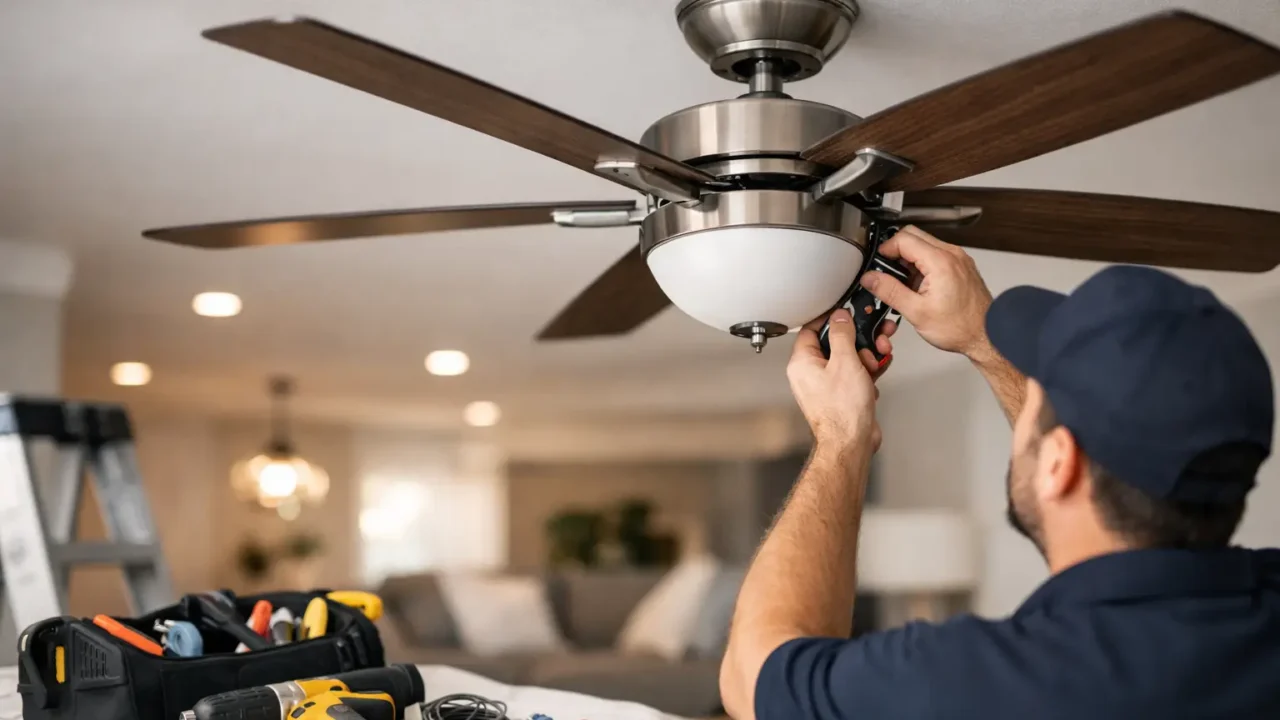
A standard ceiling fan installation generally covers the labor needed to remove an existing fan or light fixture, securely mount the new fan, connect the wiring at the existing location, assemble the fan, install the blades and light kit when included, and test its operation.
The job is not complete simply because the fan turns on. A professional installation should include checking that the fan is stable, confirming the light and fan controls work properly, and leaving the work area clean. Those final details matter, especially when a fan will run for hours at a time above a bed, dining table, or living area.
At Direct Home Pros, customers generally provide the ceiling fan and any included accessories. This gives you the freedom to choose the style, finish, blade span, and features that fit your home while receiving clear expectations about the installation work itself.
The main factors that affect ceiling fan installation cost
Replacing an existing fan versus installing at a new location
Replacing a working ceiling fan at an existing location is often the most predictable type of project. The mounting point and controls are already in place, so the focus is on safely removing the old unit and installing the new one.
A location that has never held a fan can require more evaluation. The existing setup must be suitable for the size and movement of a ceiling fan, not just a lightweight fixture. If the installation conditions are different from a standard replacement, the estimate should explain what is needed before work begins.
Ceiling height and access
Ceiling height affects both the time required and the equipment needed to complete the job safely. An eight- or nine-foot ceiling is typically more straightforward than a two-story entryway, stairwell, or vaulted living room.
High or angled ceilings may also require a downrod or mounting components that are compatible with your fan. Before purchasing a fan, measure the ceiling height and confirm whether the model is designed for a flat, angled, or sloped ceiling. A fan that looks right in the box may not be the right fit once it reaches the mounting point.
Fan size, weight, and assembly
Ceiling fans range from compact models for bedrooms to large statement fans designed for open living spaces. Bigger fans can involve more assembly, longer blades, heavier motor housings, and more careful balancing. Decorative features, integrated lights, remote receivers, and multiple control options can also add setup time.
That does not mean a larger fan is automatically a poor choice. It simply means the price should reflect the actual installation requirements rather than treating every model as identical. Bringing the fan box, manual, remote, and all included components to the appointment helps keep the project moving smoothly.
The condition of the existing mounting point
A fan needs a secure mounting location that can support its weight and normal movement. If the existing box, bracket, hardware, or surrounding area shows signs of wear, looseness, or previous improper installation, that should be addressed before the new fan is hung.
This is one reason the lowest quoted price is not always the clearest price. A service provider who ignores a visible issue may get the fan on the ceiling quickly, but that does not create the safe, finished result homeowners expect. A good estimate identifies standard scope and explains any condition that changes it.
Controls, lights, and remotes
Many current ceiling fans include remote controls, wall-control options, reversible settings, dimmable lights, and smart-home features. These conveniences can be worthwhile, but compatibility matters. The fan, light kit, remote receiver, and existing wall controls need to work together as intended.
If your goal is to keep using a wall switch, make that clear when requesting an estimate. If you want to use the included remote, have it available with the fan. Clear details in advance help prevent a last-minute mismatch between the fan you selected and the controls you expect to use.
How to get a more accurate estimate
The fastest way to receive a useful estimate is to share a few practical details upfront. Include the room, ceiling height, whether an old fan is being replaced, and the make or model of the new fan if you have it. Photos of the current fan and ceiling location can also help clarify the setup.
It is also helpful to mention anything that may affect access, such as a tall foyer, staircase, vaulted ceiling, or furniture directly below the fan. You do not need to diagnose the project yourself. Simply sharing what you see allows the service team to prepare appropriately and set fair expectations.
Published starting prices are useful for understanding a typical project, but they are not a substitute for project details. The final ceiling fan installation cost should match the actual scope of work, with changes communicated clearly rather than appearing unexpectedly after the appointment begins.
When a lower price may not be the better value
Comparing prices is reasonable, but homeowners should compare what each price includes. A low number may cover only basic mounting, while leaving out removal of the old fan, assembly, testing, cleanup, or addressing a visible installation concern.
Ask whether the work includes secure mounting, operational testing, and cleanup. Confirm whether the quote assumes a standard-height ceiling and an existing fan location. These questions are not about making a small project complicated. They are about knowing what you are paying for before someone arrives in your home.
The most reliable choice is often a provider that gives you a clear scope, respects your home, and does not pressure you into unnecessary add-ons. For a ceiling fan installation, good workmanship means the fan is secure, the controls function properly, and the room is left ready to enjoy.
A few steps to take before installation day
Before your appointment, inspect the fan box and make sure the model, blades, light kit, remote, downrod, and hardware are present. Keep the instruction manual nearby, even if the fan seems simple to assemble. Manufacturers package components differently, and the manual can confirm the intended setup.
Clear a path to the room and move fragile items from beneath the installation area. If there is furniture under the fan, move it when possible or let the service team know ahead of time. Small preparation steps protect your belongings and give the installer room to work safely.
Finally, choose the fan based on the room rather than appearance alone. Consider blade span, ceiling height, lighting needs, and the type of control you prefer. A well-chosen fan installed correctly can improve comfort in a bedroom, living room, office, or covered indoor space for years.
A clear estimate and a little preparation make this project much easier. When you know what affects the price, you can choose your fan with confidence and schedule the work knowing what to expect.