A filter that looks fine from across the room can still be restricting airflow. That is why the better question is not only how often should HVAC filters be checked, but what is happening inside your home between checks. In Dallas-Fort Worth, long cooling seasons, spring pollen, dust, pets, and busy family schedules can make a clean-looking filter dirty sooner than expected.
Checking an HVAC filter is a quick home-maintenance task, but it can prevent avoidable strain on your heating and cooling system. A regular look gives you time to replace the filter before airflow drops, rooms become less comfortable, or the system begins working harder than it should.
How Often Should HVAC Filters Be Checked?
For most homes, check the HVAC filter once a month. That does not mean every filter needs replacement every month. It means taking a minute to look at it, especially during periods when the air conditioner or furnace runs frequently.
Many standard 1-inch filters need replacement about every 30 to 90 days. Thicker pleated filters may last longer, often three to six months, depending on the manufacturer’s instructions and conditions in the home. The label on the filter is a useful starting point, but it is not a guarantee. A filter rated for 90 days can become loaded with dust well before then.
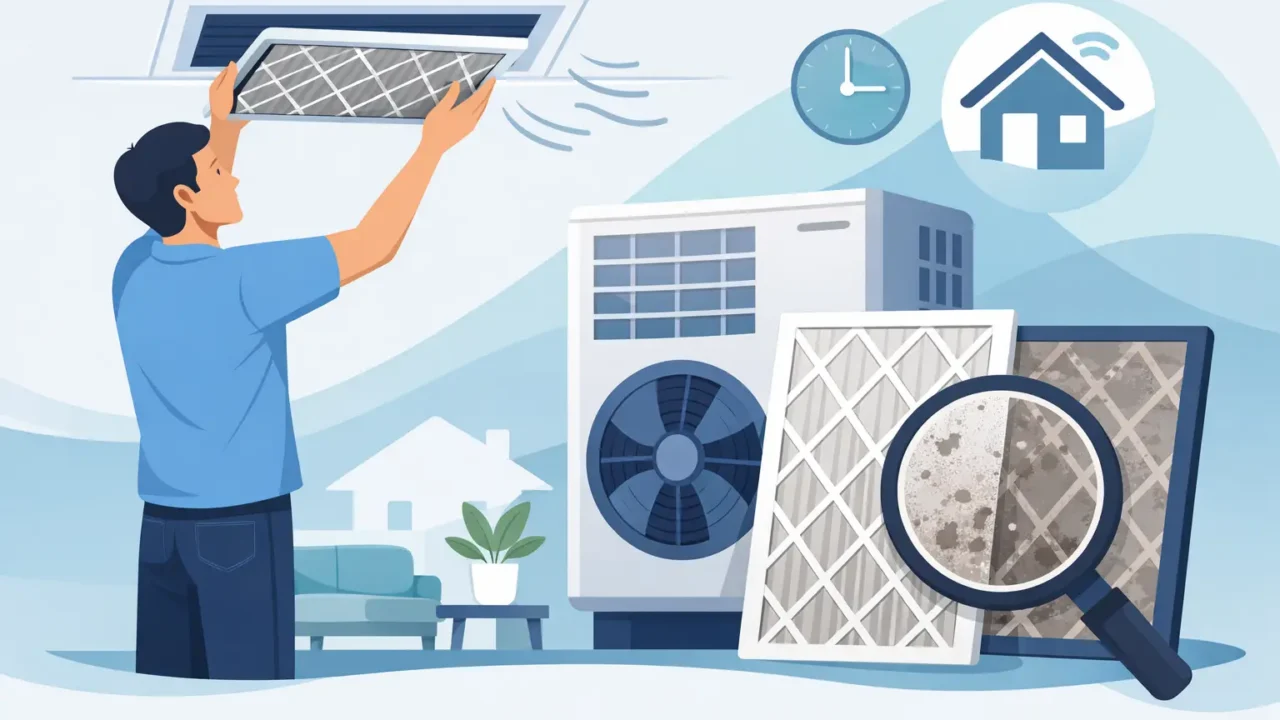
For a practical routine, check your filter monthly and replace it when it is visibly dirty, gray, bent, or covered with a noticeable layer of dust and debris. If light does not pass through the filter material easily, it is usually time for a replacement.
What Changes the Replacement Schedule?
The right schedule depends less on the calendar and more on how much your system runs and what it pulls from the air. Two homes on the same street can have very different filter needs.
A home with several pets often needs more frequent checks because fur, dander, and tracked-in debris add up quickly. Households with allergies may choose higher-efficiency filters and replace them more often to keep indoor air cleaner. Families with young children, frequent guests, or doors opening throughout the day may also see filters clog faster.
Dallas-Fort Worth weather matters, too. During a hot North Texas summer, an air conditioner may run for long stretches every day. More runtime means more air moving through the filter. Spring pollen and dry, dusty periods can have the same effect. If your system has been working consistently, do not wait for a three-month reminder to take a look.
Your filter size also makes a difference. Thin 1-inch filters generally fill up faster than thicker media filters. A higher MERV rating can capture smaller particles, which may be helpful for some households, but it can also create more airflow resistance if the filter is not compatible with the system or is left in too long. Use the filter type and rating recommended for your equipment, and ask a qualified HVAC professional if you are unsure.
A Simple Monthly Filter Check
Set a reminder on the first weekend of each month, or pair the task with another recurring home chore. Turn off the system at the thermostat before removing the filter. Then slide the filter out carefully and check both sides in good lighting.
Look for a heavy layer of dust, pet hair, dark discoloration, warping, or damage around the frame. Also confirm that the filter is seated correctly. Most filters have an arrow on the frame showing the direction of airflow. That arrow should point toward the air handler or return duct, not toward the room.
If the filter still looks relatively clean and intact, put it back in the same direction. If it is dirty, replace it with the correct size. Write the replacement date on the cardboard edge with a marker. That small habit makes it much easier to tell how quickly your household uses filters over time.
Keep a spare filter or two at home if storage allows. This avoids the common problem of discovering a dirty filter on a weekend and putting the old one back because there is no replacement available.
Signs You Should Check It Sooner
A monthly check is a good baseline, but some signs are worth acting on right away. Reduced airflow from supply vents is one of the most common. You may notice that a room takes longer to cool or heat, or that the air coming from a vent feels weaker than usual.
More dust settling on furniture can also point to a filter that needs attention, although it is not the only possible cause. A musty or stale smell when the system starts, unusually high energy bills, or longer-than-normal heating and cooling cycles can be reasons to inspect the filter as well.
Do not assume the filter is the only explanation for these issues. If replacing a dirty filter does not improve airflow or comfort, the system may need evaluation by a qualified HVAC professional. Avoid repeatedly changing to a denser filter in hopes of solving a performance issue. The wrong filter can make airflow worse.
Common Filter Mistakes to Avoid
The most frequent mistake is waiting until the filter is completely dark and clogged. By that point, the system may already be pulling air through unnecessary resistance. Regular checks are easier on the equipment and far less inconvenient than reacting to comfort problems later.
Another mistake is buying a filter based only on price or the highest available rating. A filter should fit the system’s requirements and the household’s needs. More filtration is not automatically better if it restricts airflow beyond what the equipment is designed to handle.
It is also easy to install a filter backward or use the wrong size. A filter that does not fit snugly can allow unfiltered air to move around it. Before purchasing replacements, confirm the actual dimensions printed on the existing filter or the filter slot. Nominal sizes can differ slightly from actual measurements.
Finally, do not forget that some homes have more than one return grille or filter location. Multi-story homes and larger homes may have separate systems, each with its own filter. Make a quick note of every filter location so one does not get overlooked.
Build Filter Checks Into Regular Home Maintenance
Small maintenance tasks tend to get missed when they live only on a mental to-do list. A recurring schedule turns them into something manageable. Checking filters, testing smoke and carbon monoxide detectors, watching for plumbing leaks, and looking over exterior conditions are all simple ways to catch common concerns early.
For homeowners who prefer help staying on top of these routines, Direct Home Pros HomeCare Plans include recurring preventative home-maintenance visits with routine HVAC filter checks, depending on the plan. The goal is straightforward: give homeowners clear information about common maintenance items without pressure or unnecessary upselling.
A clean filter will not solve every heating and cooling problem, but it is one of the easiest things a homeowner can control. Put the next check on the calendar now, keep the right replacement nearby, and let a one-minute habit support a more comfortable home through every North Texas season.