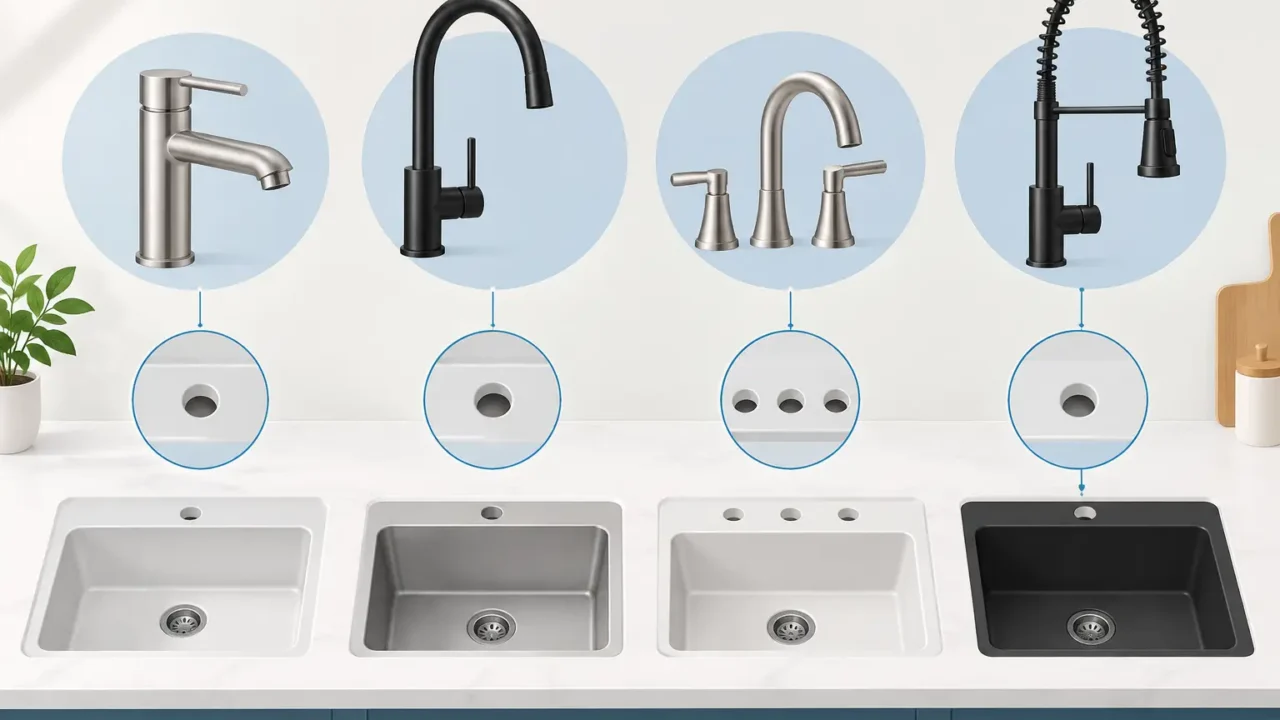
A new faucet can look like a simple purchase until you see the choices: single-handle, centerset, widespread, bridge, pull-down, wall-mount. The right answer to which faucet fits sink holes is not based on style alone. It depends on the number of existing holes, the distance between them, and whether the faucet will physically clear the sink, backsplash, and cabinets.
Taking a few measurements before ordering helps avoid a return trip, a countertop that needs unnecessary modification, or an installation day surprise. For most faucet replacements, the sink or countertop already tells you what will fit.
Which Faucet Fits Sink Holes in Your Sink?
Start by looking beneath and behind the current faucet. Count the round openings in the sink deck or countertop, including holes that may be covered by a base plate, soap dispenser, side sprayer, or small cap. Then measure from the center of one faucet hole to the center of the next.
Most residential faucets use a standard mounting-hole diameter of about 1-3/8 inches, but do not assume every sink is standard. Older fixtures, specialty sinks, and stone countertops can vary. Your new faucet’s specifications should list its required hole size, number of holes, and maximum deck thickness.
A faucet designed for fewer holes can often work with a sink that has more holes. A faucet that needs more holes than your sink has is a different situation and may require drilling, which is not always practical or advisable.
One-hole sinks and countertops
A single-hole faucet is common in newer kitchens and bathrooms. These faucets usually have one handle built into the faucet body and offer a clean, uncluttered look. Many kitchen pull-down and pull-out faucets are made for one-hole installation.
If your sink has one hole, choose a faucet specifically rated for one-hole mounting. Some faucets include a decorative deck plate, also called an escutcheon, but that plate does not create extra mounting holes. It simply covers unused ones on a three-hole sink.
One-hole bathroom faucets can be a good fit for compact vanities. Before buying, check the spout reach so water lands near the center of the basin rather than against the drain or back wall of the sink.
Three-hole sinks: centerset or widespread
Three-hole sinks are especially common in bathroom vanities. The spacing determines which faucet you need.
A centerset faucet is made for three holes that are typically 4 inches apart from the center of the left hole to the center of the right hole. The handles and spout are connected in one compact base. This is a practical option for smaller bathrooms and standard vanity tops.
A widespread faucet also uses three holes, but its handles and spout are separate pieces. Most widespread models fit holes spaced 8 to 16 inches apart, although the exact range varies by model. Widespread faucets offer more flexibility in appearance and can suit a larger vanity, but they take longer to align and install than a single-piece centerset faucet.
Some bathroom faucets are labeled mini-widespread and fit 4-inch spacing. Read the manufacturer’s specifications carefully. A faucet described as “three-hole” is not automatically compatible with every three-hole sink.
Two-hole configurations and kitchen accessories
A two-hole kitchen sink may have one opening for the faucet and another for a side sprayer, soap dispenser, filtered-water dispenser, or air gap. A bridge faucet may also use two mounting holes, though its dimensions are more specific than a standard faucet.
If you are replacing a faucet and do not plan to reuse an accessory, the extra opening can often be covered with a matching hole cover or used for a soap dispenser. Make that decision before selecting a faucet so the finish and layout look intentional.
Measure More Than the Hole Spacing
Hole count and spacing answer the first question, but several practical measurements determine whether the faucet will work well once installed.
First, measure the clearance between the faucet holes and the backsplash or wall. Some faucet handles need room to move backward, and certain bases need more flat mounting surface than others. A faucet can technically fit the holes but still be awkward to operate if the handle hits the backsplash.
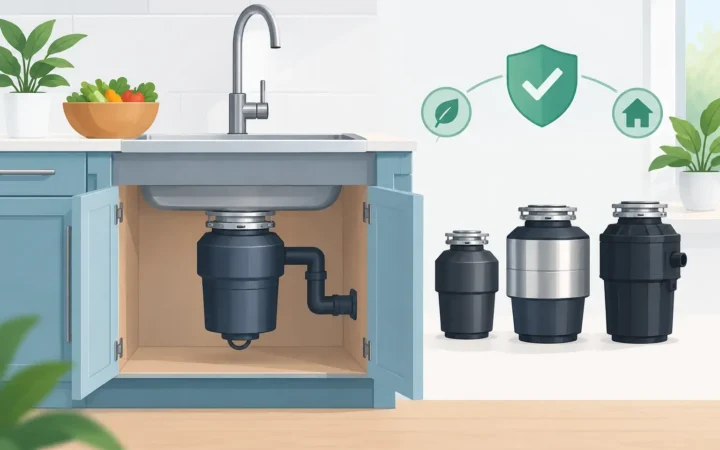
Next, look below the sink. Pull-down kitchen faucets use a hose and a counterweight. If water lines, shutoff valves, a garbage disposal, or stored cleaning supplies block the hose path, the sprayer may not retract correctly. The cabinet should also have enough room for the faucet’s mounting hardware.
Spout height and reach matter as much as the base. A very tall kitchen faucet may interfere with a window ledge or upper cabinet. A short spout can make it difficult to fill larger pots. In a bathroom, a spout with too much reach may splash, while one with too little reach can make handwashing uncomfortable.
For a vessel sink that sits above the counter, a standard low bathroom faucet is usually not the right choice. You may need a taller vessel faucet or a wall-mounted fixture designed to reach over the bowl. Wall-mounted faucets, however, require plumbing inside the wall and are not a simple replacement for a deck-mounted faucet.
Can You Use a One-Hole Faucet on a Three-Hole Sink?
Usually, yes. This is one of the most common faucet replacement situations. Many single-hole faucets include an escutcheon wide enough to cover the two unused outside holes. If it does not, you can use individual hole covers where appropriate.
Check the deck plate dimensions before purchasing. It needs to cover the full width of the existing hole pattern, and it should sit flat on the sink or countertop. A plate that is too short leaves old holes visible. One that is too wide may run into a backsplash, raised edge, or sink contours.
Using a single-hole faucet on a three-hole sink is often an easy way to update the look of a bathroom or kitchen without changing the sink. The trade-off is that a large deck plate may not suit every homeowner’s preferred style.
What to Bring When Shopping for a Replacement Faucet
A few notes and photos can prevent guesswork at the store or when ordering online. Record the number of holes, center-to-center spacing, hole diameter if you can measure it, countertop thickness, and the distance to the backsplash. Photograph the top of the sink and the plumbing below it.
Also confirm whether the faucet includes supply lines, a deck plate, mounting hardware, and a matching drain assembly. Bathroom faucets are often sold with a pop-up drain, but not always. Kitchen faucets may include supply lines but may not include an accessory such as a soap dispenser.
Finish is worth considering beyond appearance. Matching the faucet to cabinet hardware can look polished, but it is not required. More importantly, choose a finish you are comfortable maintaining. Matte black can show mineral spots in some homes, while brushed finishes often hide fingerprints and water marks better than highly polished chrome.
When Existing Sink Holes Create a Problem
An existing hole pattern can limit your choices, particularly with older sinks, unusually thick countertops, or faucets with oversized bases. Do not force a faucet into place, enlarge openings without understanding the sink material, or rely on excessive sealant to make a mismatched fixture work.
Porcelain, cast iron, stainless steel, cultured marble, granite, and quartz all respond differently to drilling or modification. If the faucet you want does not match the existing setup, it may be more sensible to choose a compatible model than to alter an otherwise sound sink or countertop.
For a straightforward replacement, having the new faucet and any needed accessories ready before the appointment keeps the work moving. Direct Home Pros can install customer-supplied replacement faucets, test the fixture for proper operation and leaks, and leave the work area clean so you can get back to using your kitchen or bathroom.
The best faucet is the one that fits your existing holes, works comfortably in the space, and gives you a result you will be happy to use every day. A tape measure and five minutes under the sink can make that choice much easier.