A new TV can look simple sitting in its box, but mounting it safely starts with one practical question: can any wall hold television weight? Not always. A wall may look solid from the outside while hiding hollow drywall, metal studs, plumbing, electrical wiring, or framing that does not line up with where you want the screen.
The good news is that most walls in Dallas-Fort Worth homes can support a television when the right mounting method is used. The key is matching the TV, wall type, mount, and hardware before any holes are drilled. That protects the television, the wall, and the people in the room.
Can Any Wall Hold a Television Safely?
No. But many common wall types can hold a television when they are evaluated correctly.
The television’s weight matters, but it is not the only factor. A 50-pound TV mounted flat against a wall places different stress on the wall than the same TV installed on a full-motion mount that extends outward. When an articulating arm is pulled away from the wall, it creates leverage that puts more force on the fasteners and framing.
The mounting bracket also has a listed weight capacity. That rating should exceed the actual weight of the TV, and it should be used only with the wall materials and fasteners the manufacturer approves. A strong mount cannot make up for weak anchors, damaged framing, or an installation point with no proper support behind it.
In many homes, mounting directly into wood studs is the most dependable option. Studs are the vertical framing members behind drywall. They give mounting screws solid material to grip, which is why locating them accurately is a central part of a proper TV installation.
What Is Behind Your Wall Makes the Difference
Drywall itself is not designed to carry the weight of a television. It is a finish material, not structural support. A lightweight TV may sometimes be installed using anchors rated for the job, but anchors have limits, and the condition of the drywall matters. Cracked, water-damaged, patched, or soft drywall should not be treated as a reliable mounting surface.
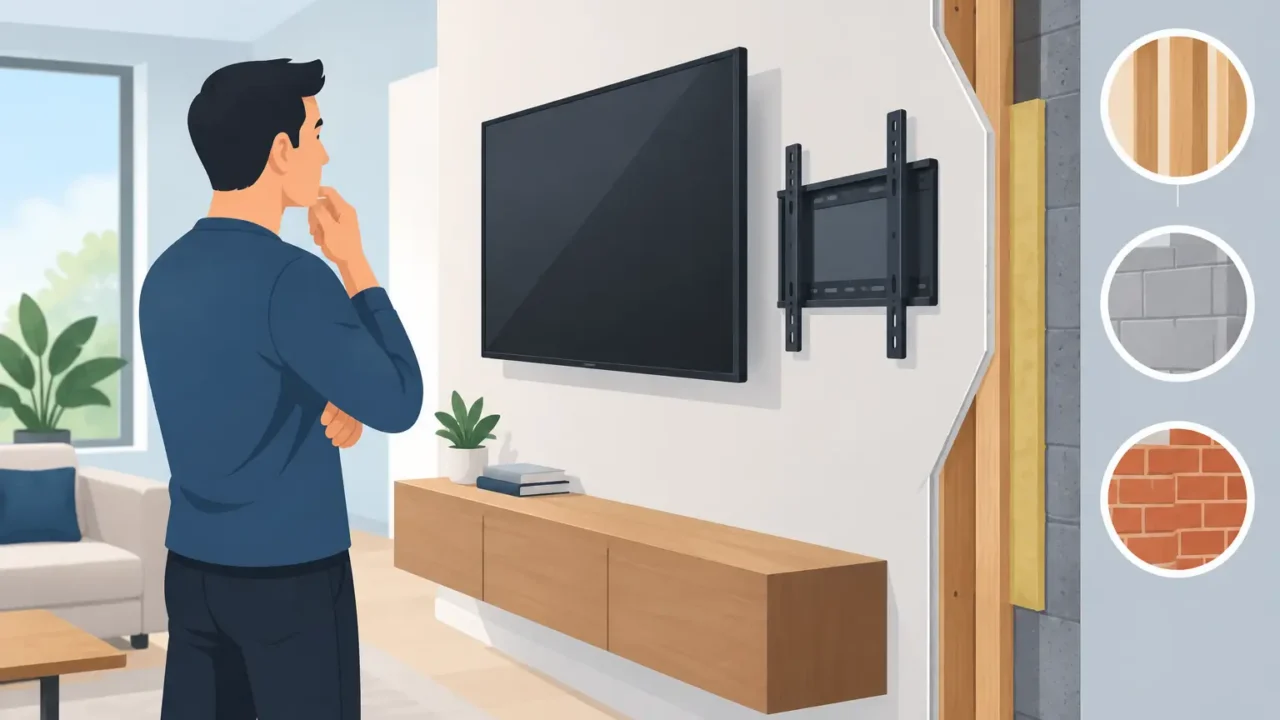
Wood studs behind drywall
Standard drywall over wood studs is common in residential homes and is often the most straightforward setup for TV mounting. A mount can usually be secured through the drywall and into one or more studs with the correct lag screws or manufacturer-supplied hardware.
Stud spacing is not always ideal for every mount or every preferred TV location. Many studs are spaced 16 or 24 inches apart, but layout can vary near corners, doors, windows, fireplaces, and remodeled areas. A professional installer confirms the stud location rather than assuming it based on a measurement alone.
Metal studs
Some homes, townhomes, condos, and newer construction use metal studs. These require a different approach from wood framing. Thin-gauge metal studs may not safely support every television and mount style without specialized hardware or added reinforcement.
This is especially relevant for large TVs and full-motion mounts. The right solution depends on the stud gauge, the spacing, the wall construction, and the TV’s weight. It is not a situation where standard wood-stud screws should be used and hoped for the best.
Brick, concrete, and masonry walls
Brick and concrete can provide excellent support, but they require the right drill bit, anchors, and installation technique. The condition of the masonry matters. Older mortar, loose brick, crumbling surfaces, and veneer systems may need a closer look before a TV is mounted.
Brick veneer is different from solid brick construction. In some cases, the visible brick is a facing material with a gap or framing behind it. Drilling into the wrong place can damage the finish without giving the mount dependable support.
Plaster, tile, and other finished walls
Plaster walls can be more brittle than drywall and may crack if drilled incorrectly. Tile adds another concern: the surface needs to be drilled carefully to avoid chips or cracks, while the structure behind the tile must still provide adequate support.
Decorative paneling, shiplap, stone veneer, and accent walls can also affect the mounting plan. A finished surface may look substantial but not be the part that carries the load. The attachment must reach suitable framing or use hardware designed for the actual wall construction.
TV Weight Is Only Part of the Calculation
Before choosing a location, check the television’s weight without its stand. That information is usually listed in the owner’s manual or product specifications. Then compare it with the wall mount’s weight rating and VESA pattern compatibility.
The mount style matters just as much. Fixed mounts hold the TV close to the wall and create relatively little outward force. Tilting mounts add modest adjustment. Full-motion mounts offer the most flexibility for viewing angles, but they also place the greatest demands on the mounting surface because the TV can extend and pivot.
A heavier TV is not automatically unsafe to mount. A properly supported large television may be safer than a smaller one attached only to drywall anchors. The installation method must fit the complete setup, not just the number on the TV’s spec sheet.
Watch for These Obstacles Before Choosing a Spot
The best-looking location is not always the best mounting location. Electrical wires, plumbing pipes, HVAC components, and low-voltage cables can run through wall cavities. Exterior walls may also contain insulation, while walls around fireplaces can have heat-related limitations or unusual construction.
Avoid treating a stud finder as the only safeguard. It is a useful tool, but readings can be affected by pipes, fasteners, dense materials, and wall texture. Careful measurements, confirmation of framing, and appropriate drilling practices help reduce surprises.
For a clean finished look, think through power and cable placement before the TV goes up. A nearby outlet may be enough for some setups, while other homeowners want cables routed neatly through a surface-mounted channel or a properly planned wall opening. Electrical work should only be handled within the appropriate scope by a qualified professional.
Signs a Wall May Need a Different Plan
A wall deserves extra evaluation if it flexes when pressed, has visible cracking, shows past moisture damage, or has wide areas with no accessible studs where the mount needs to go. The same is true when you are mounting above a fireplace, on a wall with unknown construction, or using a large full-motion bracket.
Do not rely on a mount that feels tight immediately after installation if the fasteners are only gripping drywall. Problems can develop gradually as the wall material compresses, anchors shift, or the mount is adjusted repeatedly. A television falling from the wall can cause costly damage and serious injury.
If a preferred location does not provide safe support, the answer may be to move the TV slightly, use a different mount style, or choose another wall. A small adjustment in placement is usually better than forcing hardware into a location that cannot support it properly.
A Careful Installation Is About More Than Hanging the Screen
A safe TV mount should sit level, be secured to appropriate support, and be tested before the work is considered complete. The television should be attached according to its mounting instructions, with locking mechanisms engaged and cables arranged so they do not pull on ports or interfere with movement.
Homeowners should also keep future access in mind. If the TV has streaming devices, game consoles, or sound equipment, leave enough room for connections, ventilation, and routine adjustments. A mount that looks clean but makes every cable change difficult can become frustrating quickly.
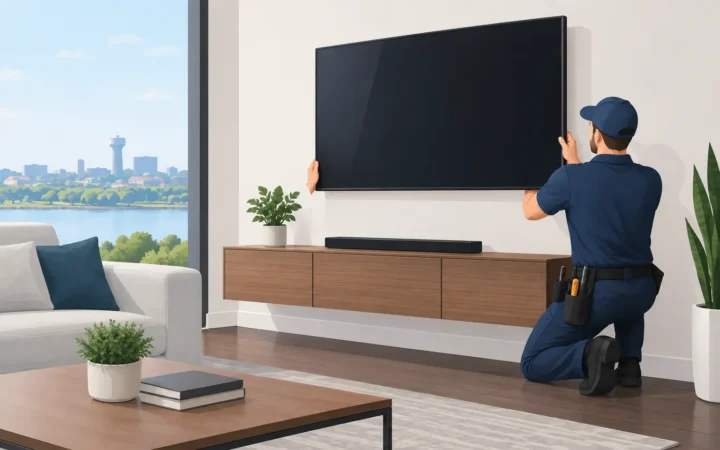
For homeowners who would rather not guess at wall construction or hardware, Direct Home Pros provides professional TV mounting with clear expectations, careful work in your home, and cleanup after the installation. A proper assessment before mounting helps avoid unnecessary holes and gives the finished setup a more secure, polished result.
A television belongs on the wall only when the wall and mounting method can support it. Taking a few minutes to verify what is behind the surface can turn a simple upgrade into a setup you can enjoy with confidence.