A new TV may look ready to mount right out of the box, but the bracket left behind from your last screen may not be a safe match. So, are TV brackets universal? Not exactly. Many TV brackets are designed to fit a range of televisions, but only when the mounting pattern, weight rating, screen size, and wall installation requirements all line up.
That distinction matters. A bracket that physically attaches to the back of a TV is not automatically the right bracket for that TV or the right choice for your wall. Taking a few minutes to check compatibility before mounting can prevent a crooked screen, damaged drywall, loose hardware, or a much more serious fall.
What makes a TV bracket compatible?
Most modern TVs use a standard mounting layout called VESA. This refers to the pattern and spacing of the threaded holes on the back of the television. VESA measurements are listed in millimeters, such as 200 x 200, 400 x 400, or 600 x 400. The first number measures the horizontal distance between mounting holes, and the second measures the vertical distance.
A bracket must support your TV’s VESA pattern. Many brackets accommodate several patterns through adjustable mounting arms, which is why they are often described as universal. But “universal” usually means compatible with a stated range of VESA patterns, not compatible with every television ever made.
Your TV manual, manufacturer specifications, or the label on the back of the TV can usually confirm the VESA size. If you cannot find it, measure from the center of one mounting hole to the center of the next hole horizontally and vertically. Convert inches to millimeters if needed.
Weight rating comes before screen size
A bracket’s advertised screen-size range is helpful, but its maximum weight rating is the more important number. Two TVs with the same screen size can have very different weights, especially when comparing older models with newer, slimmer TVs.
For example, a mount labeled for 32- to 70-inch screens may sound right for a 65-inch TV. However, it is only appropriate if the television is under the bracket’s listed weight limit and falls within its VESA range. Never assume that a larger bracket is safer simply because it looks heavy-duty. The bracket, mounting hardware, wall structure, and installation method all need to work together.
It is also wise to leave a reasonable margin below the maximum weight rating rather than selecting a bracket that is barely rated for the TV. Manufacturer ratings are based on proper installation into suitable structure. They do not account for missing studs, damaged drywall, incorrect fasteners, or an arm pulled far away from the wall.
Are TV brackets universal across every wall type?
No. Even a bracket that fits the television may not be appropriate for the wall where you want the TV installed. This is one of the most common sources of confusion with TV mounting.
A standard fixed or tilting mount is typically designed to be secured into wood studs behind drywall using the hardware and spacing specified by the mount manufacturer. The drywall itself is not intended to carry the full weight of a mounted television. A professional installation starts by locating the framing and determining whether the planned TV location allows for secure attachment.
Metal studs, masonry, brick, concrete, tile, and specialty wall systems have different requirements. Some walls can support a TV with the correct mounting approach and hardware; others may require a different location, a different style of mount, or additional evaluation. A bracket package that includes a bag of anchors does not mean every anchor is suitable for every wall.
For Dallas-Fort Worth homeowners, this can be particularly relevant in newer homes with metal framing in certain areas, fireplaces with masonry surfaces, or feature walls built around stone, tile, or paneling. The right answer depends on the structure behind the finished wall, not just what is visible from the room.
Fixed, tilting, and full-motion mounts are not interchangeable
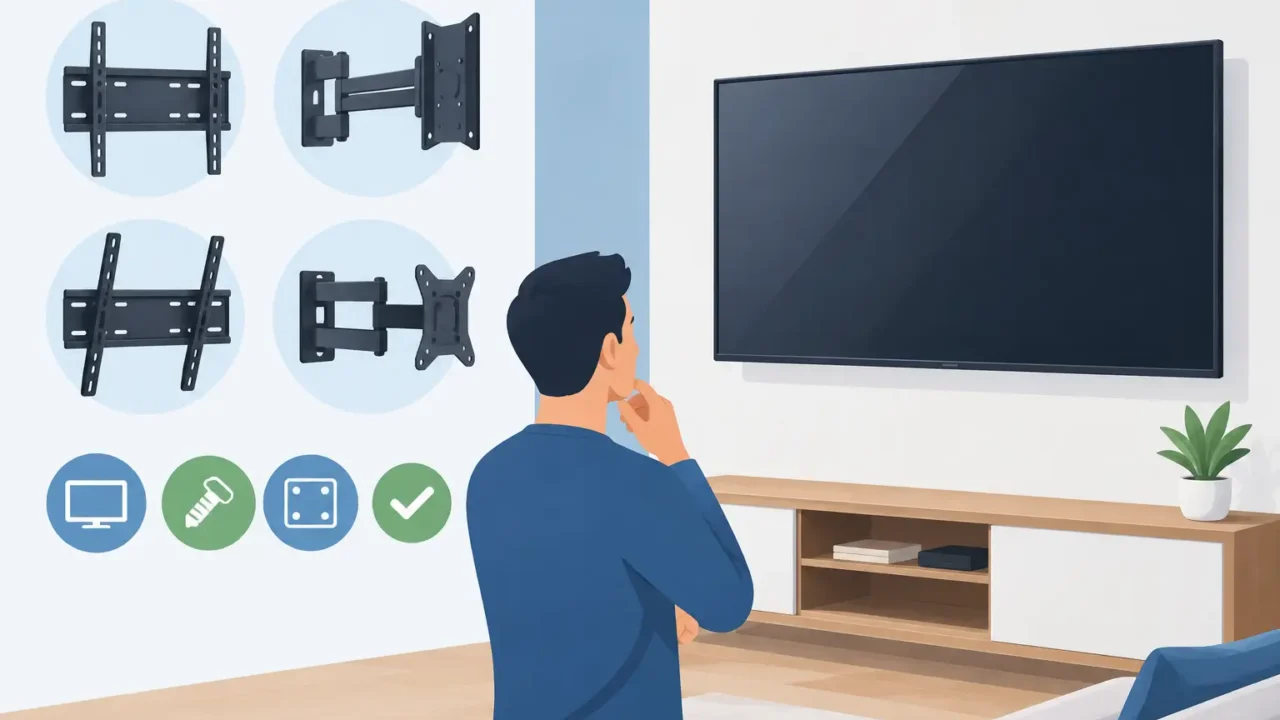
Mount type changes the forces placed on the wall. A fixed mount keeps the TV close to the surface and is often the simplest option when viewing straight ahead. A tilting mount allows a small downward angle, which can be useful when a TV is mounted higher than seated eye level.
A full-motion mount extends, swivels, and angles the screen. That flexibility is useful in a corner, an open-concept room, or a space where viewers sit in more than one area. It also creates more leverage on the wall when the arm is extended. For that reason, full-motion mounts need especially careful installation and must be rated for both the TV and the intended movement.
A mount that worked well for a lighter bedroom TV may not be the right choice for a larger living-room screen on a full-motion arm. Match the bracket to how the TV will actually be used, not just to whether the mounting holes line up.
Check these details before reusing an old bracket
Reusing a bracket can be practical, but inspect it carefully. Confirm the model number and manufacturer specifications if possible. Hardware gets misplaced during moves, installation instructions are often discarded, and older brackets may not support the VESA pattern or weight of a newer television.
Before deciding to reuse it, verify these four items:
- The bracket supports your TV’s exact VESA pattern and total weight.
- All mounting arms, locking tabs, bolts, washers, and safety screws are present and in good condition.
- The hardware is the correct diameter and thread length for the TV’s mounting holes.
- The wall plate and mount show no bending, stripped threads, cracks, rust, or prior damage.
Do not substitute random screws simply because they fit into the TV for a few turns. TV mounting screws vary by diameter, thread pitch, and length. Screws that are too short may not engage enough threads. Screws that are too long can damage the TV’s internal components. Spacers and washers may also be necessary when the TV back is curved, recessed, or uneven.
If any parts are missing or the bracket’s rating is unclear, replacing it is generally the safer and simpler choice. A new mount is usually a small cost compared with replacing a damaged TV or repairing a wall after a failed installation.
Screen size affects placement, not just bracket selection
A compatible bracket does not guarantee a comfortable setup. Before drilling, consider the viewing height, seating distance, glare from windows, nearby light fixtures, and access to electrical outlets and cables.
Most homeowners prefer the center of the TV near seated eye level, although the best height can vary based on furniture and room layout. Mounting above a fireplace may be the only available location in some homes, but it can place the screen higher than ideal and may introduce heat or glare concerns. A tilting mount can improve the viewing angle, but it cannot eliminate every compromise created by a high placement.
It also helps to hold the bracket or use a paper template at the proposed height. This gives you a clearer sense of the screen’s final position before any holes are made. Remember that the wall plate location is not always the same as the center of the television, particularly with larger mounts or arms that allow vertical adjustment.
When professional TV mounting is the practical choice
Mounting a TV can be straightforward when the wall structure is clear, the bracket is compatible, and the installation instructions are followed exactly. It becomes less straightforward when the mount is full-motion, the TV is large or heavy, the wall has masonry or tile, or the desired position does not align easily with framing.
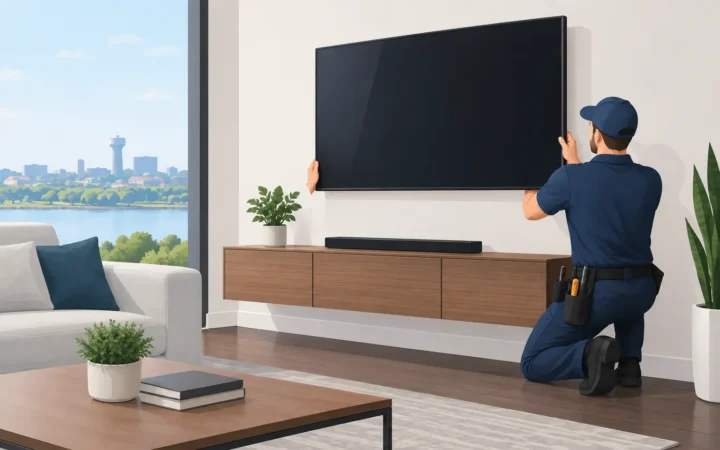
Professional TV mounting provides a second set of experienced eyes on compatibility, placement, wall conditions, and hardware. The goal is not simply to get the screen on the wall. It is to secure it properly, check that it is level, manage the work area carefully, and test the mount’s movement before the job is finished.
Direct Home Pros helps homeowners throughout the Dallas-Fort Worth area with practical TV mounting projects, clear expectations, and respect for the home. Whether you supply a new mount or want help evaluating the one you already have, knowing the TV model, mount model, and preferred wall location before scheduling helps the appointment go smoothly.
A TV bracket does not need to fit every TV to be a good bracket. It only needs to be the right match for your screen, your wall, and the way your household plans to use it.